web of life
Project Type
Educational Game Design
Systems Thinking
Sustainability
Context
Nature, Culture, Sustainability Core Seminar (NCSS)
Audience
Children ages 10–12
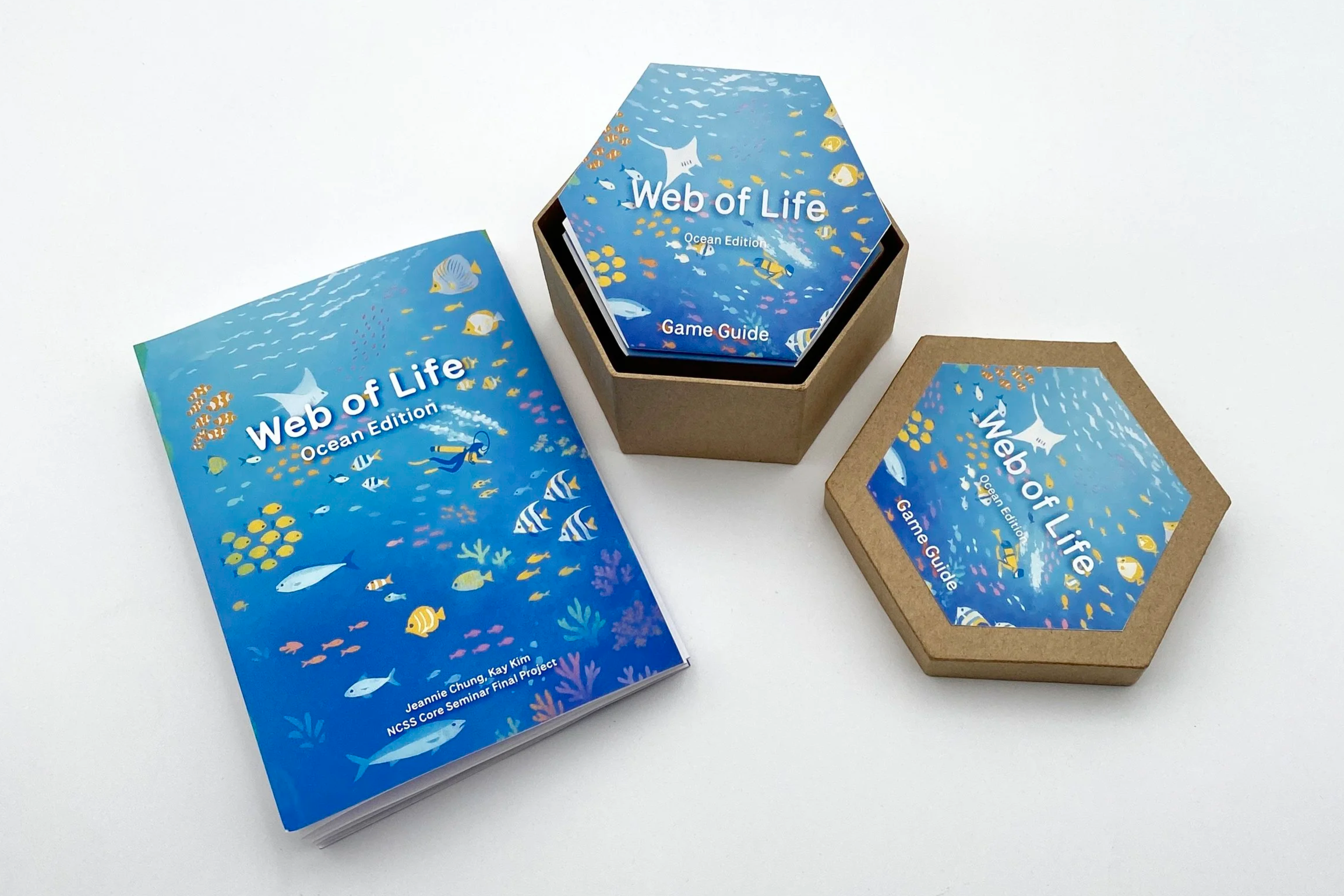
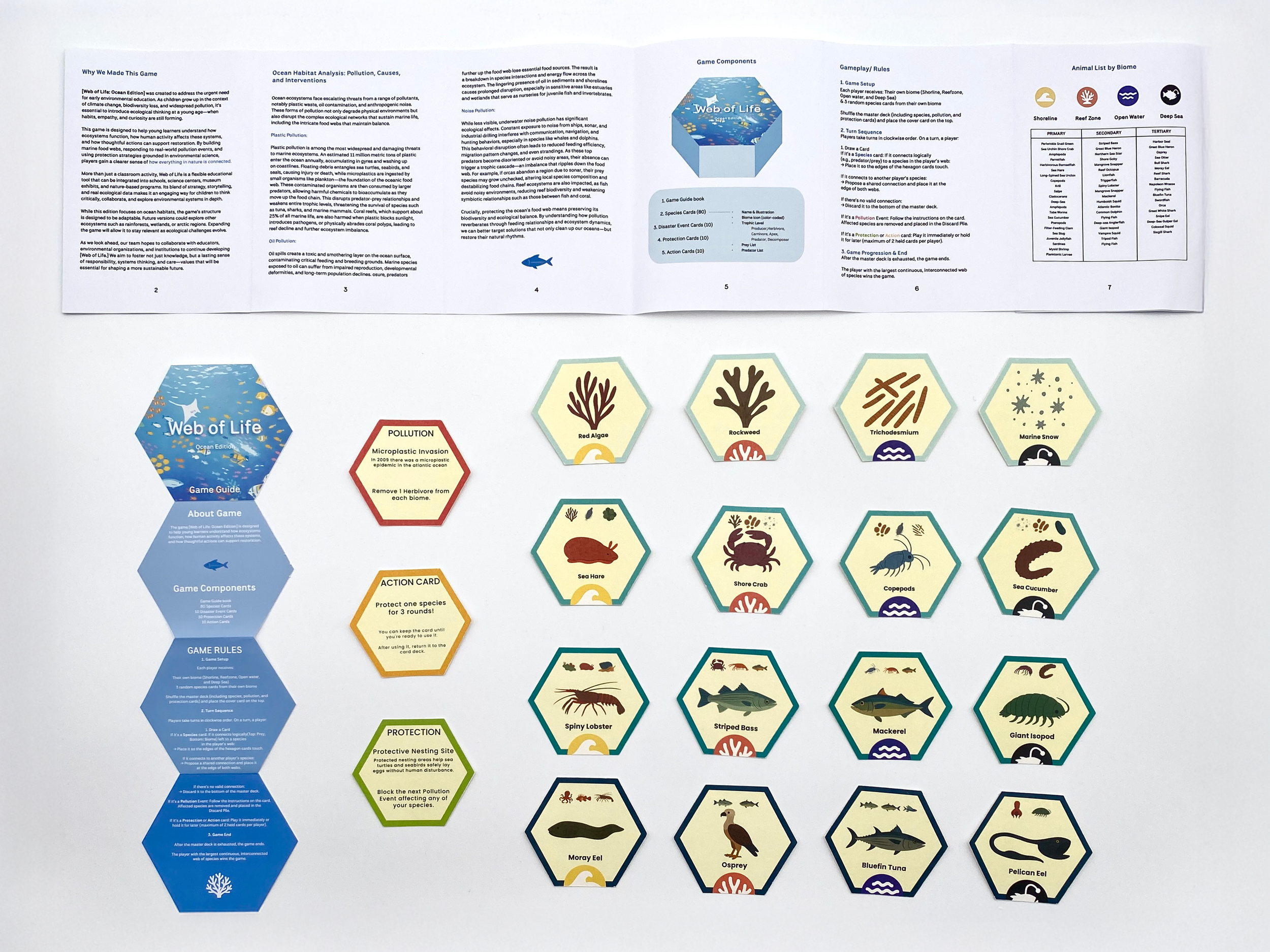
Web of Life: Ocean Edition is a research-driven card game that teaches children how marine ecosystems function as interconnected systems—where disruption and recovery ripple across food webs.
The Challenge
Climate change, pollution, and biodiversity loss are no longer distant issues for today’s children—but understanding how ecosystems function is difficult through static diagrams or isolated facts. Marine food webs are complex, interconnected, and largely invisible, making it hard for young learners to grasp how damage spreads—or how recovery is possible.
Design Question:
How might play help children understand ecological interdependence, disruption, and restoration—without oversimplifying science or relying on fear-based messaging?
Grounded in Marine Ecology
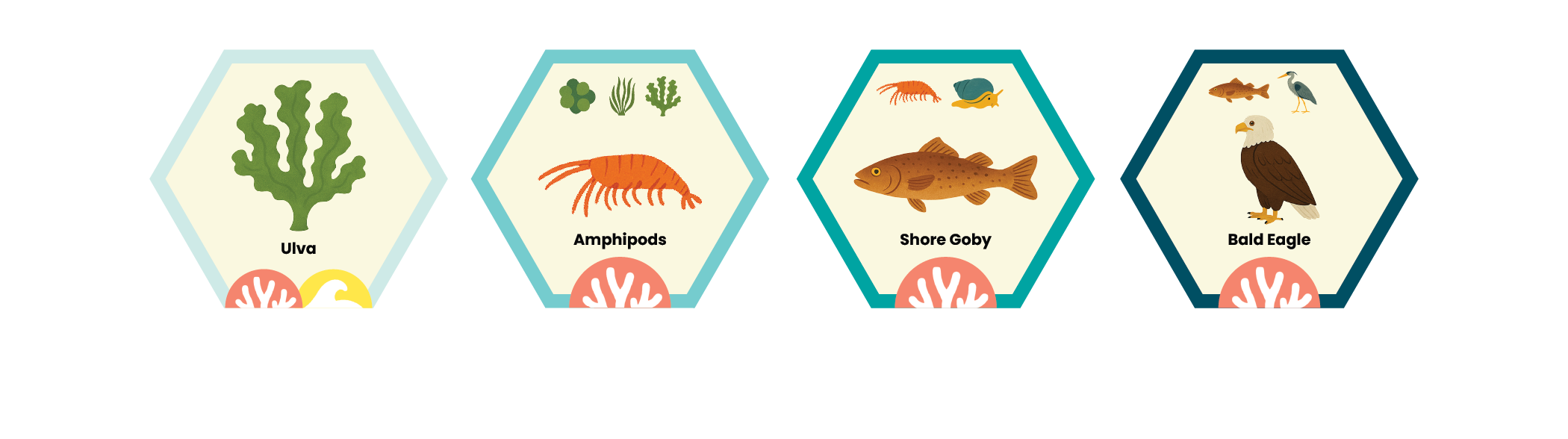
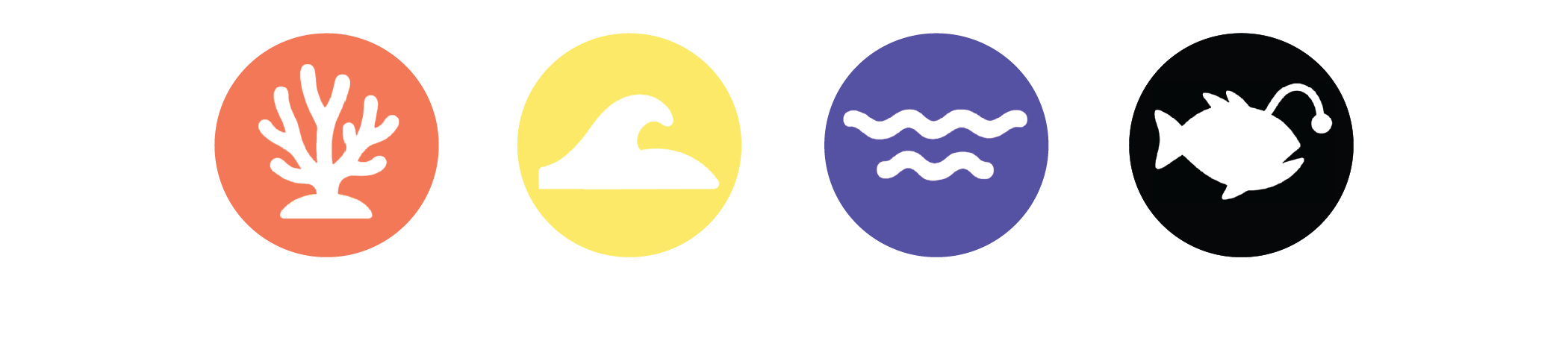
The game is built on real marine biology research, organizing species by biome and trophic level to model how energy flows through ecosystems.
This framework allows players to see how species depend on one another—and how disruptions at any level can destabilize an entire system.
From Research to Play
Rather than simplifying ecosystems, the game embraces their complexity through physical interaction.
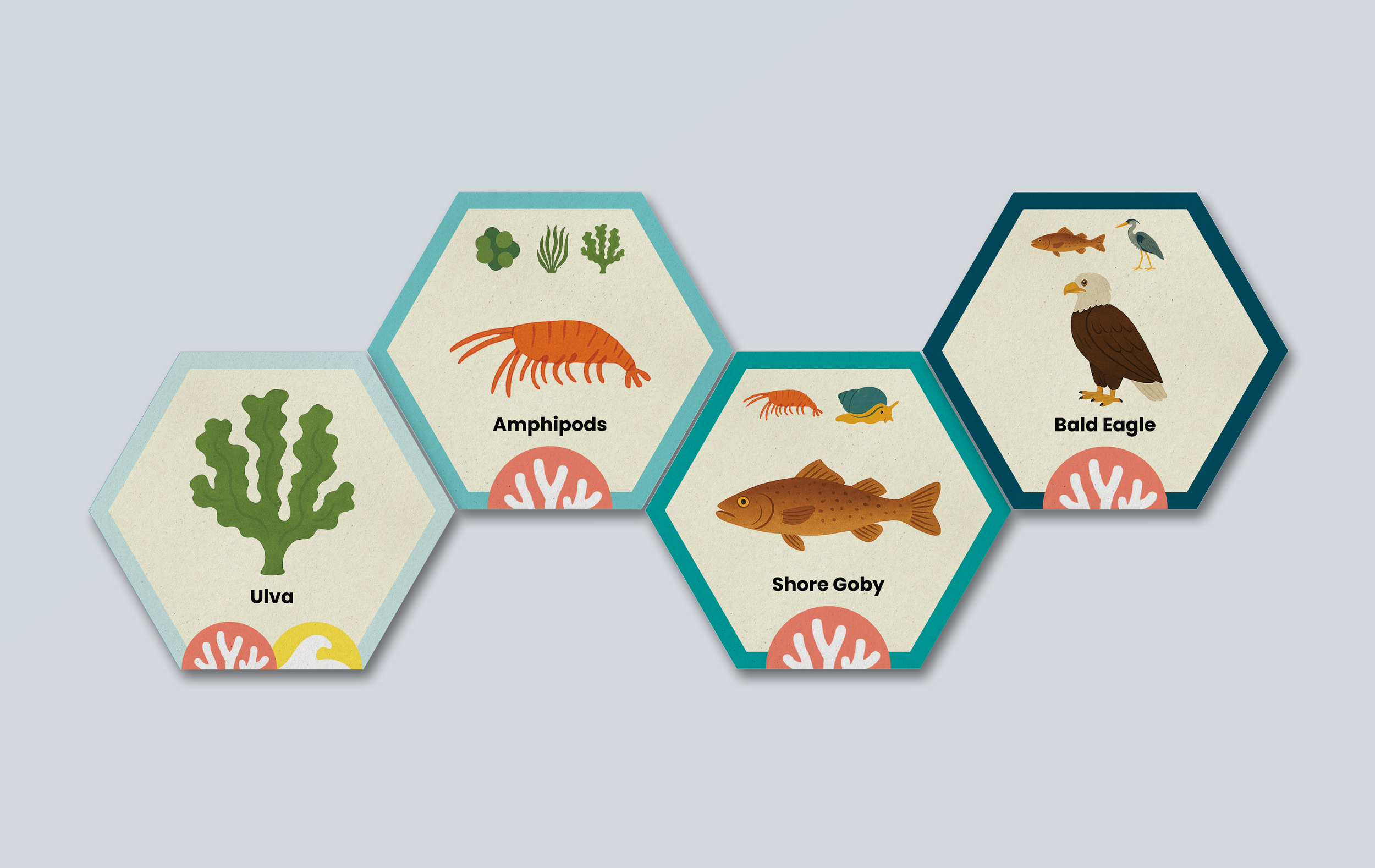
Research Insight
Ecosystems are interconnected
Disruption cascades
Biomes overlap
Recovery is possible
Design Translation
Hexagonal cards physically interlock
Disaster cards remove linked species
Multi-biome web building
Protection & restoration cards
Winning is based on biodiversity and interdependence, not point accumulation—reinforcing the idea that resilient systems are diverse systems.

